

Views: 0 Author: Site Editor Publish Time: 2026-06-11 Origin: Site


Procuring precision machined components involves significant inherent risks. You might face frustrating misaligned tolerances during assembly. You could also experience severely delayed production schedules. Even minor machining errors compound quickly across large batches. These errors threaten entire project timelines and stretch engineering budgets unnecessarily. Engineering and procurement teams constantly navigate these complex hurdles. Moving a digital CAD file to a functional physical component requires a reliable evaluation framework. You must carefully vet potential suppliers from the start. You also need to continuously optimize designs for manufacturing. Finally, you must strictly control unit economics to ensure scalable, repeatable production runs. This guide provides a highly skeptical, evidence-based approach to sourcing and evaluating your components. We outline actionable steps to navigate material selection accurately. You will learn to assess quality assurance protocols and streamline geometric constraints. We ensure you identify a manufacturing partner genuinely capable of delivering verifiable quality at scale.
Material selection directly dictates machining time and cost; align material properties strictly with functional requirements.
Over-tolerancing is the primary driver of unnecessary costs; specify tight tolerances only on critical mating surfaces.
A credible manufacturing partner should provide transparent DFM feedback, verifiable material certifications, and robust QA documentation (e.g., CMM reports).
Evaluating a supplier requires looking beyond the initial quote to assess their scalability, equipment ecosystem (3-axis vs. 5-axis), and communication reliability.
Every successful procurement cycle starts with aggressive requirement framing. You must clearly distinguish your immediate prototyping needs from long-term production runs. Prototyping demands speed and iterative flexibility above all else. You need parts quickly to test form, fit, and function. Conversely, production runs prioritize unit cost reduction, strict repeatability, and operational scalability. When sourcing Custom CNC milling parts, you must align your expectations with the specific phase of your product lifecycle.
Next, carefully evaluate process suitability. Machining involves several distinct methodologies. You should briefly confirm when milling serves as the absolute correct process. Milling excels at creating complex geometries, ensuring perfectly flat surfaces, and holding tight dimensional constraints. Turning works better for cylindrical profiles. Alternative manufacturing methods like casting or 3D printing might suit looser tolerances or different volumes. Choosing the wrong primary process early on inflates lead times drastically.
Establishing rigid success criteria ensures accountability. Define exactly what makes a procurement cycle successful before engaging any vendors. Avoid vague goals like "good quality." Instead, establish quantifiable benchmarks to measure vendor performance objectively.
Target cost-per-part: Define a maximum acceptable unit rate based on volume tiers.
Required lead time: Establish firm dock dates for both initial samples and mass production.
Surface finish requirements: Specify acceptable Ra (Roughness Average) values for critical and non-critical faces.
Acceptable defect rates: Document your exact threshold for rejected components per batch.
By mapping out these criteria clearly, you protect your supply chain from unexpected failures. Clear requirements empower suppliers to allocate the right machines and operators to your specific project.
Material machinability directly impacts tool wear and total machine time. These variables significantly influence your final quote. Selecting an overly hardened material for a simple bracket wastes resources. You must balance functional requirements against raw machinability.
Metals dominate structural applications. They offer superior tensile strength and thermal stability. However, different alloys present unique machining challenges.
Aluminum (e.g., 6061, 7075): This remains the absolute industry standard for strength-to-weight ratio. Aluminum cuts quickly and dissipates heat effectively. It is highly machinable. Therefore, it serves as the ideal choice for most Custom Metal Parts.
Steel & Stainless (e.g., 304, 316, 4140): Certain environments demand high durability and corrosion resistance. Stainless steel fulfills these needs perfectly. However, higher material hardness drastically increases machining time and tooling costs. Operators must run machines at slower feed rates to prevent premature end-mill wear.
Titanium and Exotics: Aerospace and medical sectors frequently require exotic alloys. These materials offer extreme temperature resistance and biocompatibility. They require highly specialized tooling, rigid machine setups, and significantly higher budgets.
Plastics provide excellent alternatives for weight reduction and electrical insulation. However, plastics behave very differently under a cutting tool compared to metals.
Engineering Plastics (e.g., POM/Delrin, PEEK, PTFE): These materials prove excellent for low-friction applications. They offer robust chemical resistance and outstanding electrical insulation properties. POM, in particular, chips easily and machines beautifully.
Sourcing Reality: Machining custom plastic parts requires entirely different workholding and cooling strategies. Plastics melt or deform if operators apply incorrect feeds and speeds. Heat generation causes severe warping. You must verify your vendor possesses specific, documented experience with plastic thermal dynamics. Similarly, producing tight-tolerance Plastic CNC milling parts requires climate-controlled inspection rooms, as plastic dimensions fluctuate with ambient room temperature.
Material Type | Machinability Rating | Primary Use Case | Common Pitfall |
|---|---|---|---|
Aluminum (6061) | Excellent | Housings, brackets, structural frames | Galling if coolant is improperly applied |
Stainless Steel (316) | Moderate | Corrosive environments, food processing | Work hardening during deep hole drilling |
Titanium (Grade 5) | Poor | Aerospace, medical implants | Rapid tool wear, high heat generation |
POM / Delrin | Excellent | Bearings, insulators, snap-fits | Dimensional shifting from internal stress |
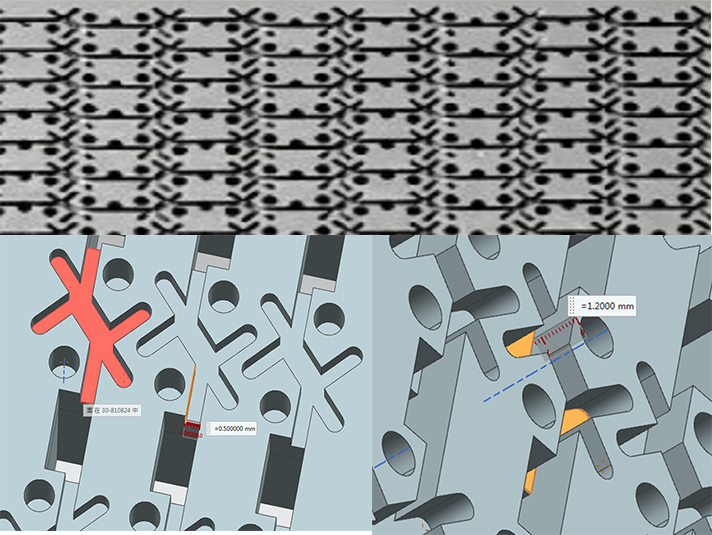
Understanding cost drivers protects your engineering budget. You must design components specifically for the manufacturing process. Ignoring DFM principles leads to exponential cost increases.
Every time an operator manually repositions a part, costs rise. Assess how many times a part must be re-fixtured to reach all surfaces. Complex geometries might require expensive custom soft jaws. Some parts mandate 5-axis machining. These advanced machines carry significantly higher hourly rates. However, they reduce manual setup times drastically compared to multiple 3-axis setups. Evaluate this trade-off carefully during the design phase.
Certain geometric features inherently resist efficient milling. You can modify these features slightly to save massive amounts of machine time.
Avoid sharp internal corners: Rotating end mills leave radiused corners inside pockets. Do not design perfectly square internal corners. Always design for standard end-mill radii. Specify a corner radius slightly larger than the tool radius to prevent the tool from pausing and causing chatter in the corner.
Limit deep cavities: End mills vibrate extensively when extended too far. This vibration causes poor surface finishes and tool breakage. Keep your depth-to-diameter ratio under 4:1 ideally. Going beyond this ratio requires specialized long-reach tools and extremely slow feed rates.
Standardize hole and thread sizes: Do not invent custom thread pitches. Stick to standard metric or imperial tap sizes. Standardizing features prevents the vendor from purchasing custom tooling, which they will inevitably bill to your account.
The relationship between dimensional tolerance and unit price is exponential, not linear. Standard tolerances (e.g., +/- 0.1mm) remain highly cost-effective for most general applications. Specifying excessively tight tolerances (e.g., +/- 0.01mm) necessitates dramatically slower feed rates. This level of precision is especially critical for complex Metal CNC milling parts utilized in advanced hardware. Achieving such tight bands requires specialized environmental controls, rigorous secondary inspections, and invariably yields higher scrap rates. Only assign tight tolerances to critical mating surfaces or bearing fits.
Trust but verify. Do not accept vague marketing phrases like "high quality" as a reliable metric. You must demand concrete evidence of a vendor's quality control infrastructure.
A reputable machine shop invests heavily in metrology equipment. Hand calipers and micrometers remain necessary for quick checks. However, they lack the repeatability required for complex modern geometries. Look for vendors actively utilizing Coordinate Measuring Machines (CMM). These machines probe specific points on a part to verify true geometric dimensioning and tolerancing (GD&T). Ask if they use optical comparators for checking complex profiles or automated probing systems directly inside the milling centers. In-machine probing allows operators to verify dimensions before removing the part from the fixture.
Proper documentation separates amateur shops from professional manufacturing partners. You need absolute traceability to mitigate liability, especially in regulated industries. This is absolutely crucial for medical or aerospace CNC milling parts, where material failure results in catastrophic consequences.
First Article Inspection (FAI) reports: Never authorize mass production without an FAI. This comprehensive report validates that the very first produced component meets every single callout on your 2D drawing.
Material Test Reports (MTRs): Counterfeit raw materials plague the global supply chain. You must request MTRs to guarantee raw material authenticity. These documents trace the metal alloy back to the originating mill.
Industry Certifications: Look for foundational process control certifications. ISO 9001:2015 serves as a strict baseline for general manufacturing quality management. AS9100 indicates compliance with rigorous aerospace standards, proving the vendor maintains exceptional operational discipline.
Evaluating a supplier requires comprehensive scrutiny. You must look far beyond the initial quoted amount. The lowest bid frequently hides enormous backend risks.
Scalability defines long-term success. Does the prospective vendor have actual machine redundancy? If their primary 5-axis mill goes down for unexpected maintenance, will your delivery schedule slip? A reliable partner possesses enough duplicated equipment to handle sudden volume spikes or machine failures without missing your strict deadlines.
A trustworthy manufacturing partner acts as an extension of your engineering team. They will proactively push back on poor CAD designs. A great machinist will flag impossible internal radii or excessively tight tolerances. They will offer practical, cost-saving modifications before finalizing any quote. If a vendor blindly accepts every difficult CAD file without a single question, proceed with extreme caution.
Reject bundled pricing models entirely. Opaque quotes hide inefficiencies. Ensure your vendor provides itemized quotes that clearly separate distinct cost buckets. You need to see exact material costs, estimated machining time, dedicated setup fees, and any necessary post-processing charges (such as anodizing, heat treating, or bead blasting). Transparent quotes allow you to identify exactly where your budget is going.
Never award a massive high-volume contract to an untested vendor. Always start with a low-volume trial order or a small prototype run. Use this initial project to stress-test their operational reliability. Evaluate their communication speed. Measure their lead-time accuracy strictly against the promised delivery date. Review their final QA reporting for thoroughness. Only scale up your orders once they prove their competence through verifiable performance.
Sourcing precision components effectively represents a rigorous exercise in continuous risk management and deep engineering alignment. Moving designs into physical reality requires careful vendor vetting and strict adherence to design constraints. You must view potential suppliers as strategic partners rather than purely transactional entities.
Prioritize clear, proactive DFM communication from your chosen vendors. Insist on applying realistic, functional tolerancing to eliminate unnecessary production expenses. Always demand verifiable QA documentation over simply chasing the absolute lowest initial bid. This disciplined approach fundamentally secures long-term value and protects your broader project timelines.
Take proactive control of your next manufacturing cycle today. Submit your finalized CAD files for a fully transparent DFM review. Request a detailed, itemized quote to see exactly how an experienced engineering team optimizes your designs for both superior performance and sustainable unit cost.
A: Your choice depends entirely on part complexity. 3-axis milling remains highly cost-effective for simpler, flat-sided geometries requiring machining on only one or two faces. 5-axis machining is strictly required for continuous complex surfacing. It is also highly recommended for multifaceted parts, as it drastically reduces multi-setup alignment errors.
A: Lead times vary based on shop capacity, raw material availability, and geometric complexity. Typically, you can expect 3 to 5 days for rapid prototypes. Standard production runs usually take 2 to 4 weeks. Always request guaranteed turnaround times written directly into your Service Level Agreement (SLA).
A: You can significantly reduce costs through smart design. Relax dimensional tolerances wherever functionally possible. Always use standard internal radii to accommodate off-the-shelf tooling. Avoid designing exceptionally deep pockets. Finally, select highly machinable materials like Aluminum 6061 or POM unless your application demands specific, extreme performance traits.


